

Understand Crack Initiation and Propagation to Prevent Failures and Enhance Structural Integrity
Summary
Fatigue Analysis can be used to evaluate the service life of components and reduce the probability of accidents. Most equipment vibration problems are due to thermal, mechanical, acoustic, or flow related excitation – and if left unchecked, will cause equipment fatigue and subsequent failure, which may lead to greater repair costs.
Fatigue failures are characterized as a progressive structural failure phenomenon that occurs by the initiation and propagation of cracks to an unstable size – until failure. Fatigue failures continue to be a major concern in engineering design. It is estimated that the annual cost of fatigue of materials to the U.S. economy in 1982 dollars was around $100 billion. These costs arise from the occurrence or prevention of fatigue failure for ground vehicles, rail vehicles, aircraft of all types, bridges, cranes, power plant equipment, offshore oil-well structures, and a wide variety of machinery and equipment.
History
In the early 1800’s there were reports of various engineers studying fatigue and failure of railroad equipment. One of the first documented fatigue investigations was reported by a German mining engineer, W. A. S. Albert, who in 1829 performed repeated loading tests on hoist chains. Later in the 1850s, August Wohler’s research on railway axle failures led to the development of strategies for averting fatigue failure caused by bending, torsion, and axial loads. Wohler also demonstrated the influence of both cyclic and accompanying steady stresses on fatigue. For a more comprehensive understanding of the historical development, read more about the History of Fatigue Analysis.Introduction
Fatigue failure investigations over the years have led to the observation that the fatigue process embraces two domains of cyclic stressing or straining that are significantly different in character, and with each – failure is produced by different physical mechanisms. One domain of cyclic loading is when significant plastic straining occurs during each cycle, which is associated with loads exceeding the material elastic limit, resulting in low cycles to failure – commonly referred to as low-cycle fatigue.
The other domain of cyclic loading is when strain cycles are largely confined to the elastic range, and is associated with lower loads and long lives, or high numbers of cycles to failure – commonly referred to as high-cycle fatigue. Low-cycle fatigue is typically associated with cyclic lives from one up to about 104 or 105 cycles, and high-cycle fatigue for lives greater than about 104 or 105 cycles.
The final failure occurs when the remaining section—the part of the whole section not yet affected by the progressing crack—is no longer able to withstand normal operating forces. See Introduction to Fracture Mechanics.
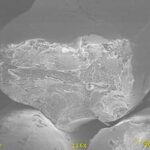
In some instances, the fracture’s appearance exhibits recognizable signs that it was caused by fatigue and may give other clues that point to the failure’s origin. Characteristic features, commonly called “beach marks,” represent progressive stages of crack development. In certain metals (such as aluminum alloys) beach marks may not be clearly visible by optical means. In this case, striations usually can be observed with a scanning electron microscope (SEM). In equipment design, preventing fatigue failure during the designated lifespan is imperative. Components enduring numerous cycles should be designed to maintain stress amplitudes below fatigue design curves, ensuring an infinite life. Conversely, components experiencing stresses surpassing fatigue strength are engineered for a finite life.
Presently, three major approaches exist for design against fatigue failures:
- Stress-Based Approach: This traditional method relies on nominal (average) stresses within the component area. It determines the cyclic load’s resistible nominal stress by accounting for mean stresses and adjusting for stress-raising features like grooves, holes, and fillets.
- Strain-Based Approach: This involves a more intricate analysis of localized yielding at stress-raising points during cyclic loading.
- Fracture Mechanics Approach: Primarily considering material toughness, crack size, and stress levels, this approach requires an understanding of crack growth and fracture.
Fatigue Failures
Fatigue failure is the most common cause of failure in mechanical and thermal processing equipment, accounting for an estimated 80 percent (1). The basic reason relates to the myriad of the causes of failures which include deficiencies in design, materials, processing complexities and owner/operator error. Failures have been traced to corrosion, material defects, stress risers, structural hot spots, dynamic loads, variable weather conditions and other factors not adequately covered by Design, Safety and Fabrication Codes & Standards.
A formal metallurgical investigation attempts to pinpoint the exact cause of failure – faulty design, defective material, improper treatment, surface damage, or pure high cycle fatigue. Interdisciplinary teams are essential for performing most failure analyses, since the root cause is rarely the result of a single variable. In performing metallurgical failure analysis we investigate operational issues, environmental factors, load paths and stresses to a system or component.
ASME Code Origin: The fatigue design life evaluation procedures in Section III of the ASME Boiler and Pressure Vessel Code were originally developed in the U.S. Naval Nuclear Program. Those involved included Dr. Bill O’Donnell, President, (Bernie) Langer, W.E. (Bill) Cooper and James (Jim) Farr – who, in the late 1950’s and early 1960’s developed the initial formulation of this technology in the Tentative Structural Design Basis for Reactor Pressure Vessels and Directly Associated Components, which became known as “SDB-63.”
Section III of the ASME Code “Vessels in Nuclear Service” was the first to include specific Code rules to prevent low cycle fatigue failure. Its first edition was published in 1963. Section VIII, Division 2, “Alternate Rules for Pressure Vessels” followed in 1968.
References
- “Mechanical Behavior of Materials – Engineering Methods for Deformation, Fracture and Fatigue” Norman E. Dowling, College of Engineering, Virginia Polytechnic Institute and State University, Blacksburg, VA, 1993, Prentice Hall, NJ 07632
- “Failure of Materials in Mechanical Design – Analysis, Prediction, Prevention” J.A. Collins, Ohio State University, 1981, John Wiley & Sons
- “Metal Failures – Mechanisms, Analysis, Prevention” Arthur J. McEvily, Professor Emeritus, Department of Metallurgy and Materials Engineering, University of Connecticut, 2002, John Wiley & Sons
- “Engineering Against Fatigue” J.H. Benyon, M.W. Brown, T.C. Lindley, R.A. Smith, & B. Tomkins, Eds., 1999, A.A. Balkema, Rotterdam, Netherlands
- “Code Design and Evaluation for Cyclic Loading – Sections III and VIII” W.J. O’Donnell, Chapter 39 Companion Guide to the Boiler & Pressure Vessel Code – Criteria and Commentary on Select Aspects of the Boiler Pressure Vessel and Piping Codes, Second Edition, Vol. 1, Ed. K.R. Rao, 2006. ASME
Fatigue / Failure Analysis Resources
O’Donnell Consulting’s approach to fatigue analysis draws on decades of direct involvement in ASME code development and hands-on failure investigation across pressure vessels, piping, rotating equipment, and structural components. Depending on the nature of the problem, our engineers apply stress-based, strain-based, or fracture mechanics methods to assess remaining service life, identify root causes, and develop practical remediation strategies. Whether the engagement involves a proactive design review, an in-service crack assessment, or a post-failure forensic investigation, we bring the same depth of technical rigor to each evaluation.
Related Projects
- Fatigue / Failure Investigation on a Wire Rope
- FEA & Fatigue Analysis of a Hydroelectric Turbine Shaft
- Fatigue Analysis & Fitness for Service Evaluation on PSA Vessels
- Fatigue Analysis & Design Recommendations on a Chemical Tumbler
- FEA & Fatigue Analysis to ASME Code of a Heat Exchanger Coil
Resources
Of Wire Rope
